
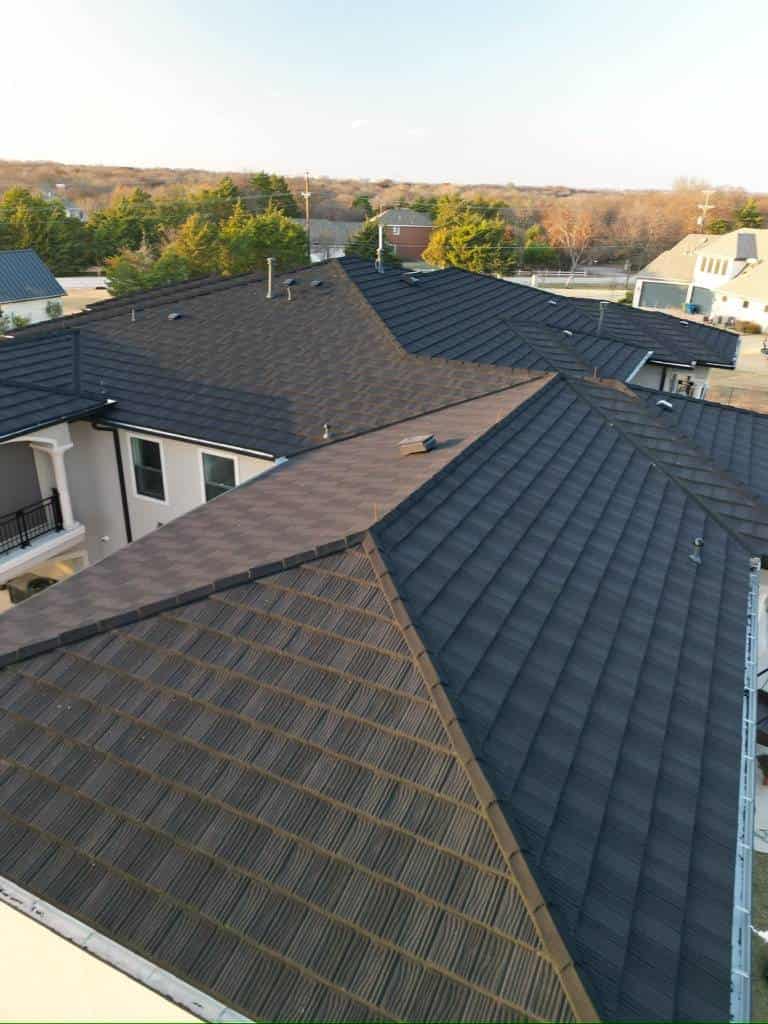
Class 3 vs. Class 4 Impact-Resistant Shingles
What impact ratings mean, how Class 3 and Class 4 shingles compare in North Texas hail, and what to ask your insurance agent about impact-resistant roofs.
If you're replacing a roof in hail country, you'll hear about impact ratings. Here's what they mean and how to decide what's right for your home.
What the classes mean
Impact ratings come from the UL 2218 test, which drops steel balls of increasing size onto a shingle and checks for cracks. Class 1 is the lowest rating and Class 4 is the highest, tested with a two-inch ball. A higher class means the shingle survived larger impacts in the lab.
Class 3 shingles
Class 3 shingles hold up to larger hail than standard shingles and are a meaningful upgrade for North Texas. Our standard installation uses Class 3 impact-rated, 130 mph wind-rated shingles with a 50-year manufacturer warranty (a warranty rating, not a promised lifespan).
Class 4 shingles
Class 4 shingles carry the top impact rating and generally cost more. No shingle is hail-proof, and very large hail can still damage a Class 4 roof, but they give the most protection available in asphalt.
Ask your insurance agent
Some insurance companies offer premium discounts for Class 4 impact-resistant roofs. Whether yours does, and how much, depends on your insurer and policy, so ask your agent before you decide. Any discount can help offset the higher cost over time.
Installation matters as much as the rating
An impact rating only helps if the roof is installed correctly: proper nailing, underlayment, flashing and ventilation. That's where premium labor earns its keep, whichever shingle you choose.