
How to Photograph Storm Damage for Your Records
A safe, simple way to photograph hail and wind damage around your home after a North Texas storm, from wide shots to close-ups, without climbing on the roof.
Good photos taken soon after a storm make it much easier to describe what happened, whether you're talking to your insurance company, your roofer or a future buyer. Here's how to do it safely without ever setting foot on the roof.
Start with the date
Write down the date and approximate time of the storm. Phone photos record the date automatically, so take them as soon as it's safe. If hail is still on the ground, photograph a few stones next to a coin or ruler for scale.
Work from wide to close
- Wide shots of each side of the house, so it's clear where everything is
- Medium shots of each damaged area: a gutter run, a section of siding, a window
- Close-ups of individual dents, cracks and torn screens
- Any roof damage you can see from the ground or a window, zoomed in
Don't forget the surroundings
Hail leaves evidence everywhere: dents on cars, mailboxes, AC units and outdoor furniture, spatter marks on fences and decks, and shredded plants. These help show how severe the storm was at your address.
Inside the house
Photograph any new ceiling stains, drips or wet insulation. If water is coming in, photograph it first, then protect your belongings and keep receipts for any emergency repairs or tarps.
Leave the roof to the pros
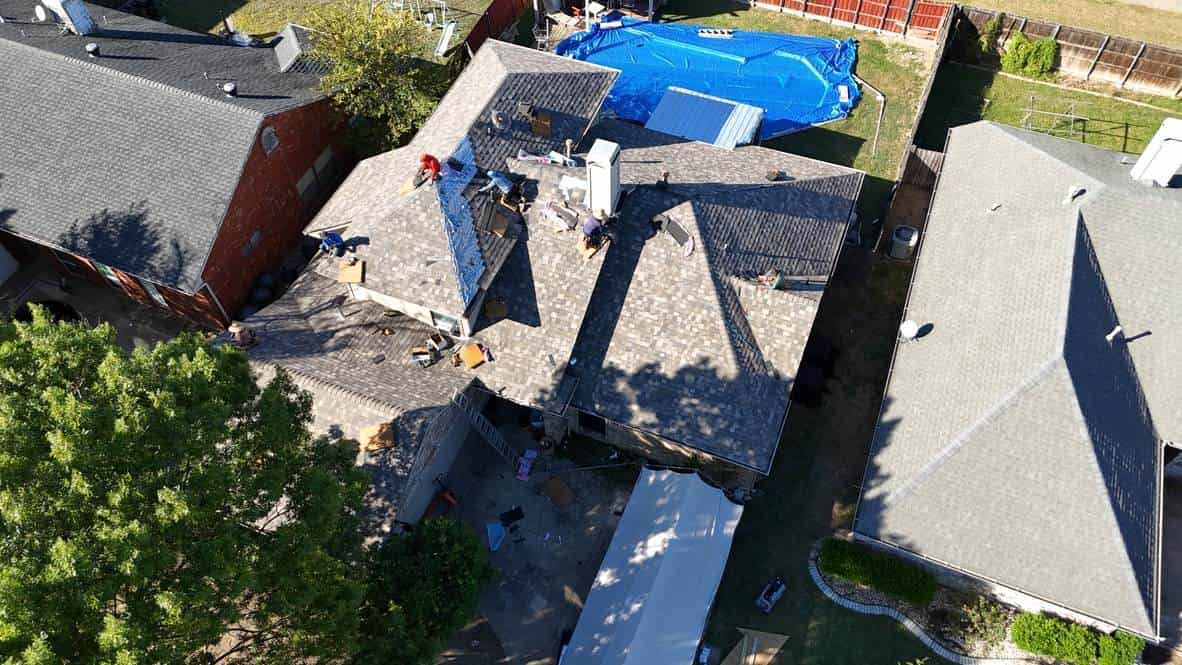
Roofs are dangerous, especially when wet or damaged, and walking on bruised shingles can make damage worse. A professional inspection with a drone and hands-on check documents the roof itself. Ours is free, and you keep the photo report.