
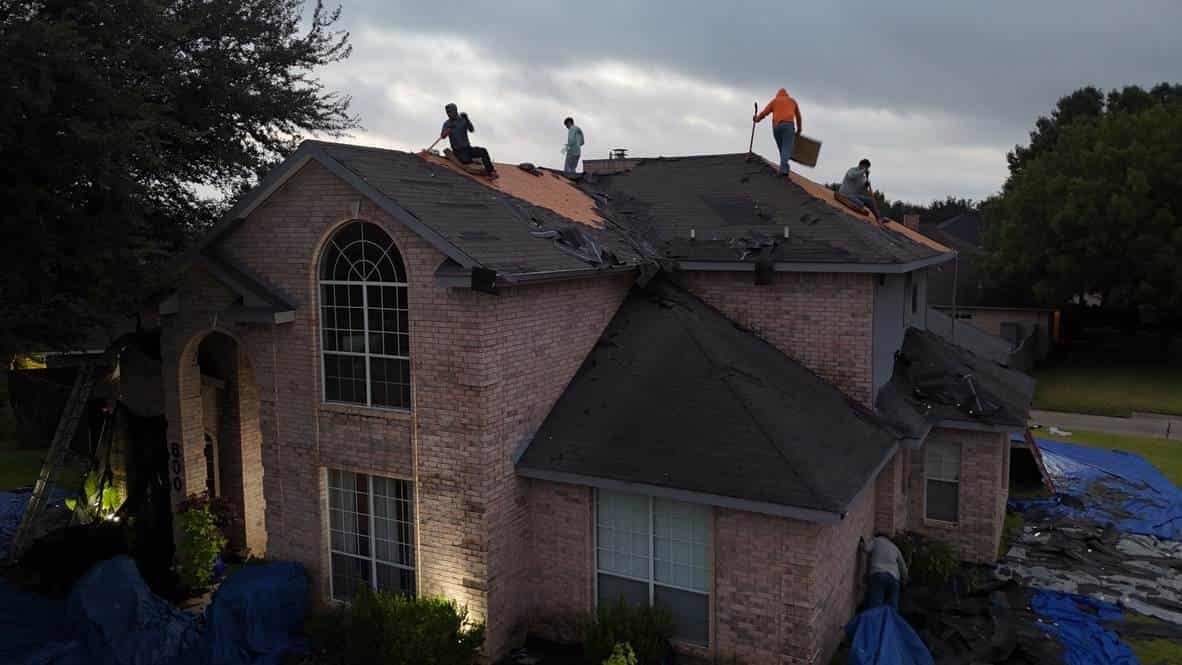
How to Choose a Roofer in Texas (and Avoid Storm Chasers)
A homeowner's checklist for hiring a roofer in Texas after a storm: what to ask, what to get in writing, and the red flags that should end the conversation.
Every big North Texas storm brings a wave of door-knockers, flyers and trucks with out-of-state plates. Some are legitimate. Many are gone by the time a warranty problem shows up. Here's how to tell the difference.
Questions to ask any roofer
- Where is your local office? Can I visit it?
- Can you show me proof of liability insurance and workers' compensation or occupational accident coverage?
- Who will actually be on my roof: your crew or subcontractors?
- What materials will you use, and will the manufacturer's warranty be registered in my name?
- What does your labor warranty cover, and for how long? Is it in writing?
Get it in writing
A written contract should spell out the scope of work, the materials, the price and payment schedule, and how cleanup and warranty work are handled. Never sign a blank or partially filled-in contract, and keep a copy of everything you sign.
Red flags
- Offers to waive, cover or rebate your insurance deductible. That's illegal in Texas
- Promises to negotiate your claim or 'get it approved.' Only licensed public adjusters and attorneys can represent you with your insurer
- Pressure to sign the same day, or a 'storm special' that expires tonight
- Demands for full payment before work starts
- No local address, only a cell phone number
Check them out
Look up reviews on Google, check for complaints with the Better Business Bureau, and ask for references from jobs near you. The Texas Department of Insurance also publishes consumer guidance on hiring a contractor after a storm at tdi.texas.gov.
What a good roofer does
A good roofer inspects before quoting, shows you photos of what they found, explains your options without pressure, and tells you plainly when a roof doesn't need replacing. That's the standard we hold ourselves to.