
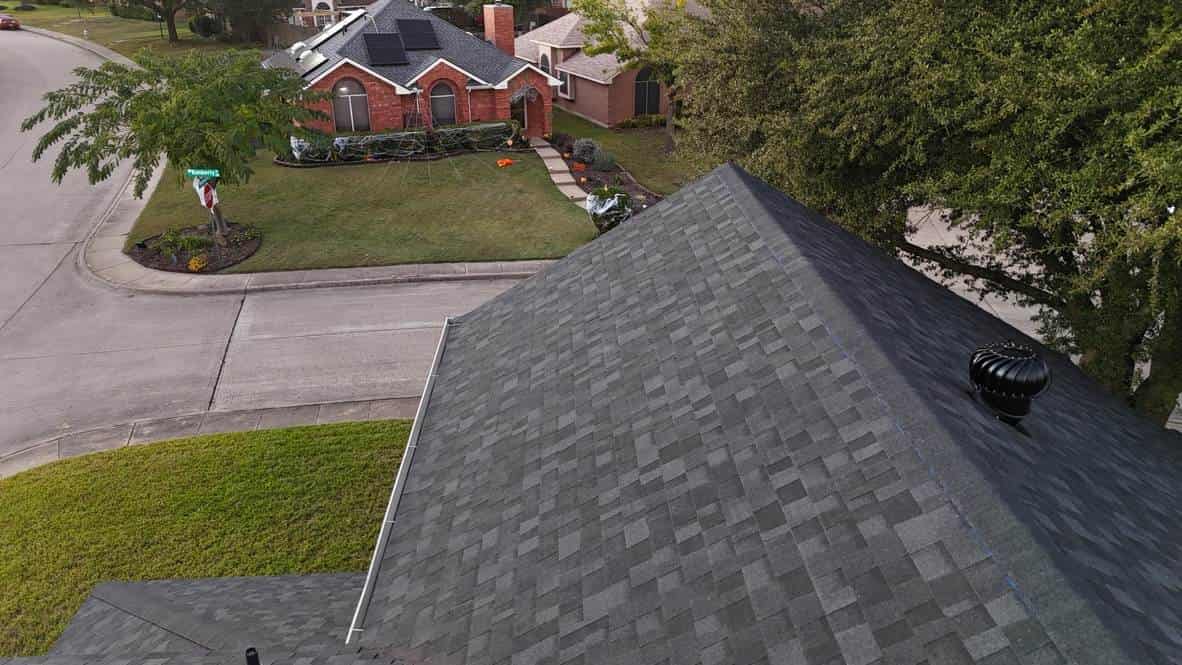
Attic Ventilation: Why It Matters in Texas Heat
How attic ventilation protects your roof and lowers cooling costs in North Texas, the difference between intake and exhaust vents, and signs of trouble.
Ventilation is the part of a roof most homeowners never think about, and one of the biggest reasons roofs fail early in Texas. On a summer afternoon, a poorly ventilated attic can get far hotter than the air outside, and that heat cooks your shingles from below.
How attic ventilation works
A good system is balanced: cooler air comes in low through intake vents, usually in the soffits under the eaves, and hot air leaves high through exhaust vents such as ridge vents or roof vents. That steady flow carries heat and moisture out of the attic.
Why it matters
- Longer shingle life: less heat baking the roof from underneath
- Lower cooling bills: a cooler attic means less heat radiating into your living space
- Less moisture: ventilation helps prevent condensation, mold and rotted decking
- Warranty: many shingle manufacturers require proper ventilation for full warranty coverage
How much ventilation is enough?
Building codes set minimums based on attic size. A common rule of thumb is one square foot of net free vent area for every 150 square feet of attic floor, split between intake and exhaust, with some exceptions allowing less. Your roofer should calculate it for your house rather than guess.
Common problems
- Soffit vents blocked by insulation or paint
- Too little intake for the amount of exhaust
- Mixing exhaust types, like ridge vents and power fans, that can work against each other
- Bathroom or kitchen fans venting into the attic instead of outside
Signs of poor ventilation
Look for an attic that feels extremely hot and stuffy, upstairs rooms that won't cool down, rusted nails or damp spots on the underside of the decking, and shingles that are curling or blistering early. We check ventilation on every inspection and correct it on every roof we replace.